
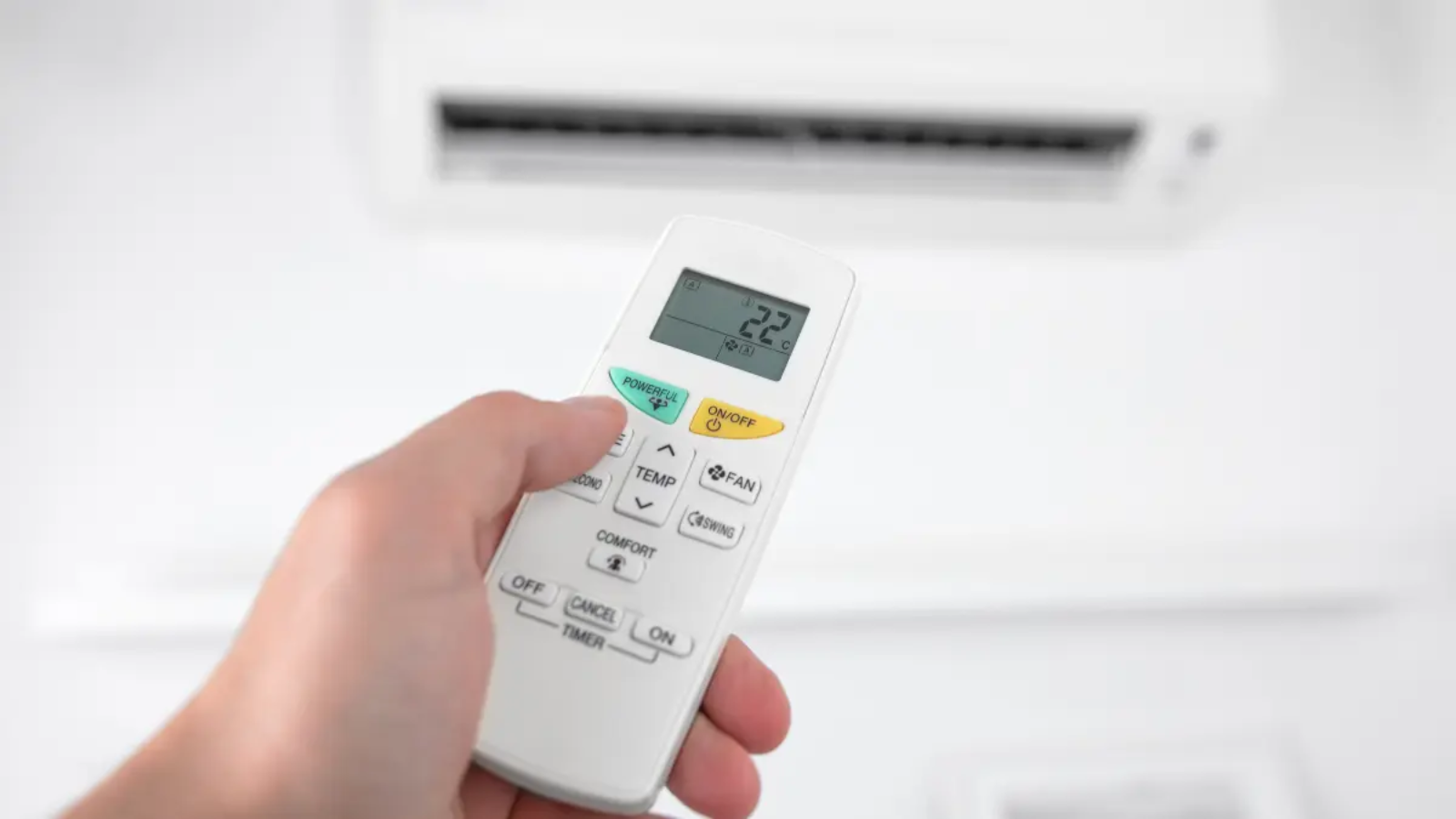
Summer in India is not just hot. It is expensive. You buy an AC to sleep peacefully, but the electricity bill gives you sleepless nights later. A wrong choice can easily bloat your monthly expense by ₹3,000 or more.
In 2026, buying an AC is tricky. Technology has changed. Inverter compressors are now standard. BEE star ratings are stricter. And marketing terms like “Dual Inverter” or “AI Cooling” are everywhere.
We at Trusty Guide created this guide to clear the confusion. We break down the math on Split vs. Window and Inverter vs. Non-Inverter.
AC Buying Guide 2026: What Should You Look For?
The most critical factor is the Tonnage and Compressor type. For a standard 150 sq ft bedroom, a 1.5 Ton 5-Star Inverter Split AC is the best choice for low electricity bills.
If you are a tenant moving frequently, a 1.5 Ton Window AC offers the best value and portability. Always insist on 100% Copper Condenser Coils for durability.
Key Takeaways
- Measure your room first. A 1 Ton AC in a 150 sq ft room will never cut off. It will run continuously and double your bill. Always follow the sizing chart.
- Tenants should buy Window ACs. They are cheaper, easier to install, and you don’t need to patch up the landlord’s wall when you move out.
- Inverter ACs save money. If you use the AC for more than 4 hours a day, a 5-Star Inverter model is mandatory. It recovers the extra cost in electricity savings within two summers.
- Copper is non-negotiable. Never buy an AC with an Aluminium condenser coil. Aluminium leaks cannot be repaired. Copper ensures your AC lasts for 7-10 years.
- ISEER beats Stars. Don’t just look at the stars. A higher ISEER rating (above 4.5) means lower bills.
Step 1: Tonnage Calculator (Don’t Guess This)
Size matters. If your AC is too small, it will run non-stop and never cool the room. If it is too big, it will cool too fast and leave the room feeling sticky and humid.
The “Heat Load” Rule: Do not just measure the floor. Look at the walls. Is your room on the top floor? Does the sun hit your window directly? If yes, you need more power.
Simple Sizing Chart
| Room Size (Sq Ft) | Standard Room | Top Floor / Direct Sun |
| Up to 120 | 1 Ton | 1.2 Ton / 1.5 Ton |
| 121 – 170 | 1.5 Ton | 1.5 Ton (Heavy Duty) |
| 171 – 220 | 2 Ton | 2.2 Ton |
Pro Tip: For most Indian master bedrooms (12×12 or 14×12 feet), a 1.5 ton inverter AC price list 2026 is the gold standard. It handles the 45°C May heat effortlessly.
Step 2: Split vs. Window AC (The Tenant’s Dilemma)
This is the classic debate. Your decision depends on one thing: Do you own the house?
Window AC: The “Desi” Favorite
It is a single box unit. It sits in a window frame.
- Pros: It is cheap. Installation is simple (slide it in). No drilling holes in walls.
- Cons: It blocks your window view. It is noisier because the compressor is right next to your ear.
- Verdict: Best for tenants. When you shift flats, you just pull it out and take it. No expensive uninstallation charges.
Split AC: The Modern Choice
It has two units. One sits inside, and the noisy compressor sits outside.
- Pros: It is silent. It looks premium. It cools faster and more evenly.
- Cons: Installation is expensive (₹1500+). You need to drill holes for copper pipes.
- Verdict: Best for homeowners or bedrooms where silence is a priority. (Check our guide on the Silent AC with sleep mode if noise is a dealbreaker).
Step 3: Inverter vs. Non-Inverter (The “Bill” Difference)
Salesmen will confuse you with jargon. Let us simplify it with a car analogy.
Non-Inverter (Fixed Speed)
Imagine driving a car in the city. You accelerate to 60 km/h, then hit the brakes to stop. Then accelerate again. This “stop-start” driving wastes a lot of fuel.
- How it works: The AC runs at full speed to cool the room, then cuts off. When the room gets hot, it starts again at full speed. This spikes your electricity meter.
Inverter AC (Variable Speed)
Imagine driving on a highway with cruise control. You maintain a steady 60 km/h. The engine runs smoothly and sips fuel.
- How it works: The AC starts fast to cool the room. Once cool, it slows down the compressor to just maintain the temperature. It never turns off completely. This saves huge amounts of electricity.
Verdict:
- Buy Non-Inverter only for a guest room used less than 2 hours a day.
- Buy Inverter for any bedroom used for sleeping (8+ hours).
Step 4: Power Bill Calculator (Real Cost in Rupees)
Here is the truth about your monthly bill.
- Assumptions: Electricity cost ₹8 per unit. AC runs for 8 hours every night.
| AC Type | Avg. Units Per Hour | Monthly Cost (Approx.) |
| 1.5 Ton Window (3-Star) | 1.3 units | ₹3,120 |
| 1.5 Ton Split (3-Star Non-Inv) | 1.2 units | ₹2,880 |
| 1.5 Ton Split (5-Star Inverter) | 0.7 units | ₹1,680 |
The Savings:
By choosing a 5-Star Inverter over a cheap Window AC, you save roughly ₹1,500 every month. That is ₹6,000 saved in a typical 4-month summer season. The expensive Inverter AC pays for itself in just two years.
(Use those savings for your next holiday! And don’t forget to carry the travel credit card to save on forex fees too.)
Step 5: Critical Features to Check in 2026
Don’t let the shiny features fool you. Check these three technical specs.
1. Copper Condenser Coil
This is non-negotiable in India. Many budget brands use Aluminium condensers to cut costs.
- Problem: Aluminium reacts with air and leaks gas within 2-3 years. It cannot be repaired; the whole coil must be replaced (costing ₹5,000+).
- Solution: Always ask, “Is this 100% Copper?” Copper can be repaired easily by any local mechanic.
2. ISEER Rating
The Star rating is just a sticker. The real number is the ISEER (Indian Seasonal Energy Efficiency Ratio).
- Look for an ISEER value above 4.5 for 5-Star ACs. A 5.2 ISEER AC saves much more than a 4.6 ISEER AC, even if both are 5-Star.
3. PCB Warranty
Inverter ACs have a complex motherboard (PCB) in the outdoor unit.
- Risk: Voltage fluctuations can fry this PCB. A replacement costs ₹8,000.
- Advice: Buy brands that offer a 5-year warranty on the PCB.
Buying Checklist: 5 Things to Ask the Dealer
Before you swipe your card, ask these questions to avoid hidden costs.
- Is the installation kit included? (Copper pipes and wire are expensive. If not included, set aside ₹1,000 extra).
- Do I need a stabilizer? (Most modern Inverter ACs are “stabilizer-free,” but if your area has bad voltage fluctuations, buy one anyway).
- What is the outdoor stand cost? (They never include the metal stand. That’s another ₹700–₹1,000).
- Is the coil 100% copper? (Check the box or manual to be sure).
- What is the free service schedule? (Usually, you get 2 free services in the first year).
Frequently Asked Questions
Is a 3-star Inverter better than a 5-star Non-Inverter?
Yes, absolutely. The Inverter technology itself is more efficient. A 3-Star Inverter will consume less power and maintain a more stable temperature than a 5-Star fixed-speed AC.
Which AC brand provides the best service in India?
Service depends heavily on your local area. However, traditionally, brands like Voltas, LG, and Daikin have the widest service networks across Tier-2 and Tier-3 cities.
How much does AC installation cost in 2026?
Standard installation charges range from ₹1,200 to ₹1,500. However, extra copper piping, the outdoor stand, and core cutting (drilling through concrete) are charged extra.
Does a stabilizer need to be bought for Inverter ACs?
Companies claim “Stabilizer Free Operation” between 150V and 280V. But in India, voltage spikes can go beyond this range. We highly recommend buying a stabilizer to protect the expensive PCB.
Conclusion
Buying an AC is a long-term relationship. You will live with it for the next 7 to 10 years.
- Measure your room correctly.
- If you own the house, stretch your budget and get a Split Inverter AC.
- If you are renting, stick to a Window AC.
- Always choose Copper coils.
Don’t be “penny wise and pound foolish.” Spending ₹5,000 extra on a 5-Star model today will save you ₹20,000 in bills over the AC’s life.